
LynuxWorks
LynuxWorks software from Internet and phone communications, to airline flight-control systems, of……...


The LAS system from Hiden has been particularly developed to examine the leak rate from sealed packages, from a quality control or research and development point of view. The system can be used to analyze a range of fill gases and impurities. The automated system offers a pass/fail analysis depending on the given leak rate minimum.
Applications
Residual gas analysis and vacuum processing
Semiconductors
Gas analysis
The Hiden Leak Analysis System has been automated for easy use in quality control or R&D environments. It has been developed specifically for analyzing the leak tightness of small- to medium-size sealed packages like portable battery assemblies and micro gas cylinders.
Hiden makes use of the sensitivity and speed of mass spectrometry to offer a quick and efficient solution for examining sealed packages like lithium-ion batteries and finding production quality and leak rates.
An extensive range of tracer gases, fill gases, or volatile electrolyte species can be examined, such as normal fill gases including argon, helium, carbon dioxideand impurities like water vapor. The system can detect leak rates below 1 × 10⁻⁷ mbar⋅L/second with self-calibration checks against familiar leak rate standards.
Equipped with Hiden’s dedicated software, the system is user-friendly and offers an automated pass/fail analysis depending on the determined leak rate minimum. The software can be tailored for specific applications.
Features
Automated operation
Highly sensitive
High throughput
Non-destructive testing
Dry, contamination-free testing technique
In modern life, energy storage is very essential. With the increase in dependence on battery-powered devices, performance and lifetime are considered crucial features of the technology.
The failure rate and lifetime of the battery are based on battery contamination remaining at a minimum. Hence, battery leak tightness is crucially essential to guarantee that no electrolyte escapes from the sealed battery or other gases can penetrate the battery.
Leaking electrolyte can lead to various safety problems as a result of the flammable nature of the battery components, while the entry of air results in a shorter battery life as water vapor contaminates the battery. Even a few ppm of water can lead to the degradation of battery performance.
Image Credit: Hiden Analytical
Direct contact with water can result in the contamination of the electrolyte, and there is a possibility of entry of water vapor into the battery cell if it is not leak-tight, which can build up to a hazardous level.
To guarantee that water vapor does not enter the battery cell, the optimum allowable leak size is 1 × 10⁻⁶ mbar⋅L/second, which can be detected only with the help of specialized leak-detection equipment like a mass spectrometer linked to a vacuum test chamber containing the battery.
Battery manufacturers should make use of leak-testing methods to test battery packs and even separate battery cells during manufacturing and assembly to make sure leak tightness is fine and that the electrolyte in the battery cells does not escape or interact with water.
The Hiden Leak Analysis System has been automated for easy use in quality control or R&D environments and developed for examining the leak tightness of small- to medium-size battery assemblies.

Image Credit: Hiden Analytical
LynuxWorks software from Internet and phone communications, to airline flight-control systems, of……...

We make products that are engineered on the inside for life on the outside. We do this so our cus……...
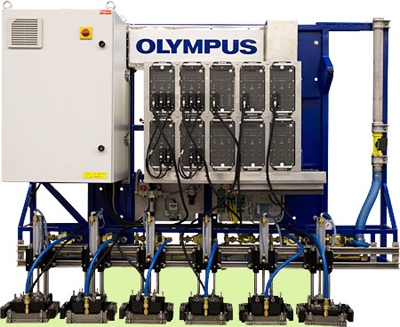
Using the advantages of the phased array technology, Olympus has designed a powerful inspection s……...

Measurement Solutions specializes in all types of sensors, transducers, signal conditioning, data……...

Laser Components is specialized in the development, manufacturing and the sales of components and……...

SENSeOR designs and manufactures sensors for original equipment manufacturers (OEMs) as well as e……...
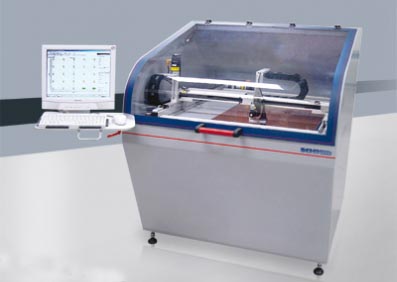
The panel measuring table supplies fast information on the etching distribution after differential etching processes or on the thickness of copper plating. The measurements are carried out fully au……

Oakton Temp-300 Dual-Input Thermocouple Datalogging Thermometer logs up to 2000 sets of readings in real time with date and time stamp. USB output lets you transfer data to your computer. Automatic……

Monnit Corporation was established to capitalize on the emerging trend of connecting to, monitoring and controlling machines and other “things” in our environment. Their backgrounds in ……