
Advanced NDT Ltd.
ADVANCED NDT Ltd, is an established supplier of Non Destructive Testing equipment to most leading……...


Hamamatsu's MCPs (microchannel plate) are a type of 2D sensor that are capable of detecting gamma rays, X-rays, vacuum UV rays, ions, and electrons in a vacuum, and amplifying the detected signals.
Rectangular and circular MCPs are offered in different dimensions, including user-friendly MCP assemblies with pre-mounted electrode leads and supports. These MCPs are commonly used in various types of analytical equipment, including surface analysis, semiconductor inspection, and mass spectroscopy.
The MCP assemblies are offered with three types of readout devices to fulfill the specific application requirements. The devices include single anode, where electrical output signal measurement is in effective area; multianode where electrical output signal measurement is corresponding to signal input positions; and phosphor screen (optical imaging of output signal). Users are advised to choose the ideal output device based on their application requirements.
It is possible to select one to three stage MCPs for the assembly to get the required gain, allowing applications in the analog mode involving measurement of output signal as a continuous electrical current, or the counting mode where it is possible to measure the low level signal by a binary processing.
Download the Brochure for More Information
Operating Principles
The application of the voltage VD between the input and output sides of the MCP establishes a potential gradient along the channel. The introduction of an electron from the input side to a channel and the subsequent striking of the electron on the inner wall of the channel releases multiple secondary electrons.
The potential gradient accelerates these secondary electrons to draw parabolic trajectories, which are identified by their initial velocities. The secondary electrons then strike the channel’s opposite wall, causing the emission of additional secondary electrons. In this way, the electrons repeatedly strike the inner wall of the channel while traveling towards the output end, extracting a large number of exponentially increased electrons from the output side.
An MCP’s thickness is nearly equal to the length of the channel. The ratio of the channel length (L) to the channel diameter (d) is referred to as α (α = L/d). The gain of the MCP can be determined from this α and the secondary emission factor intrinsic to the channel wall material. Standard MCPs are fabricated so that α is 40 to 60. The design value of this a and the channel diameter are to be known to determine the thickness of MCPs.
The ratio between the channel open area and the entire effective area of an MCP is defined by the open area ratio or OAR. The bias angle is the angle between the channel axis and the axis at right angles to the plate surface. This angle is selected by taking into account the spatial resolution and detection efficiency as well as the avoidance of input signals from traversing through the channels without striking the channel walls. The optimum value is typically between 5° and 15°. The OAR of standard MCPs is typically set to 60%, whereas the OAR of funnel type MCPs is enhanced up to 90% to direct more signals into every channel.
Customization
Hamamatsu also offers custom-designed MCP assemblies and MCPs in addition to standard MCPs. Assemblies featuring a phosphor-coated fiber optic cable are also offered to enable fiber-coupling to solid state imaging devices such as CCD, MOS linear image sensors. Assemblies with a readout device, an MCP, and lead terminals coupled to a special vacuum flange or PCB are also offered.
MCP F12334-11
This assembly has adequate time response characteristic for time of flight measurements, and can be used for X-ray, ion, and VUV-light detection. Thin and flat shapes facilitate installation onto the minimum space, which is a key aspect from the perspective of mechanical design. This assembly can be easily installed and replaced, thanks to the 2-point electric wiring. Custom assembly is also offered.

MCP F9890-11
MCP F9890-11 is an MCP-assembly equipped with high time resolution for use in TOF-MS detectors. The MCP effective area is 27 mm diameter.

ADVANCED NDT Ltd, is an established supplier of Non Destructive Testing equipment to most leading……...

PSI, Inc. is the Authorized worldwide stocking distributor of Partlow and Future Design controlle……...

Switch to Good Energy and we’ll match all the power you use at home with 100% renewable ele……...
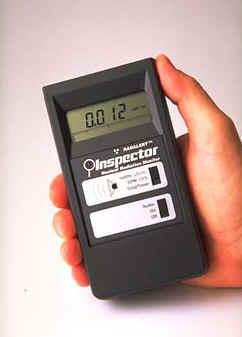
The Inspector(geiger counters) measures alpha, beta, gamma, and x radiation using a 2-inch pancak……...
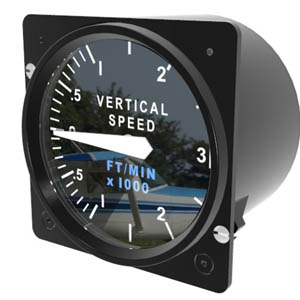
Servo driven very precise replica of an aircraft gauge especially designed for flight simulation.……...

Air-Vac is committed to producing the highest quality rework/repair, selective soldering/desolder……...

MROcrib is dedicated for customers of Industrial & Electric Supply Co. The products offered are primarily used for the repair and maintenance of production related equipment including products ……

Eidesvik Offshore ASA owns and operates a worldwide fleet of purpose-built vessels, providing ship services for offshore supply and transport of pipes, oil recovery and stand-by, maintenance and in……

Trojan Technologies enables customers to meet their water quality objectives by providing eco-efficient solutions that reduce and recover costs, energy, resources and space. Collaboratively solving……