
Peco InspX
Peco InspX is the leading provider of advanced technology inspection solutions for food and bever……...


Teledyne Judson Technologies offers a range of detector options for short-wave, mid-wave, and long-wave infrared sensing. Mercury Cadmium Telluride (HgCdTe, MCT) comes with a tunable bandgap, which means that users can optimize the sensitivity based on the wavelengths of interest to the system, and is provided in both thermoelectrically cooled packages and dewar-mounted sensors for liquid nitrogen cooling for ultimate performance.
Key Features
Sensitivity from visible to 26 µm
Low 1/f noise
Thermoelectric or dewar cooling
Integrated amplifier and TE controller for easy integration
Superior performance to DTGS, InAs, InSb
Applications
Pyrometry/Radiometry
FTIR spectroscopy
Transport/Rail safety
Industrial process control
Gas analysis/Chemical detection
Laser detection and monitoring
Advantages of HgCdTe
Mercury Cadmium Telluride (HgCdTe, MCT) detectors are widely customizable, with a tunable sensitivity range between 2 µm and 26 µm. Two varied sensing modes are also offered.
The first mode is the photovoltaic mode, which is mainly applicable to MWIR MCT and SWIR detectors. It offers better sensitivity compared to InSb, lower 1/f noise compared to PbS, PbSe, and MCT photoconductors (PC MCT), high linearity, and can operate without abias.
The second mode is the photoconductive mode, which is primarily applicable to LWIR detectors beyond 12 microns. It provides even higher sensitivity in the longwave spectrum compared to photovoltaic mercury cadmium telluride (PV MCT) detectors. Such sensors are provided with a range of cooling choices tuned to the required spectral sensitivity. All products providesensitivity ranging from the visible up to the required spectral cutoff.
Examples of Detectivity for Teledyne Judson MCT Sensors

Typical D* vs Wavelength for 2.8 µm cutoff PV MCT sensors.Image Credit: Teledyne Judson Technologies.
Typical D* vs Wavelength for 5.0 µm cutoff PV MCT sensors.Image Credit: Teledyne Judson Technologies.

Typical D* vs Wavelength for Dewar-mounted PC MCT sensors.Image Credit: Teledyne Judson Technologies
Field of View
At no extra cost, a standard cold field of view (FOV) is included. A custom field of view can also be provided at a small additional cost. By restricting the FOV angle, the detectivity can be improved, and the background current (IBG) can be reduced. The theoretical dependence of D* on FOV, where θ the full-angle field of view, is given as the below-mentioned equation:
or to convert from a D* at a known FOV of θ to a new FOV of θ’:
The cold cutoff angle of the FOV should be selected to limit undesirable background radiation while receiving all desired radiation from the optical system. Dewar-mounted sensors have a 60° (full-angle) FOV with f/1 optics, unless otherwise specified. Thermoelectrically cooled devices have the scene field of view defined by the window size.
Cold Filters
Optional cold filters can maximize detectivity by minimizing background radiation in unwanted wavelength areas. Teledyne Judson provides two standard cold filters: SP29 (0.5 - 2.9 μm) and SP35 (1.7 - 3.5 μm). On a custom basis, other bandpass filters can be ordered.
Peco InspX is the leading provider of advanced technology inspection solutions for food and bever……...

Eolink was founded in 2016 by Marc Guyot a former Renault engine engineer who patented Eolink flo……...
We spark the imagination of device manufacturers with top-of-the-line building blocks of the digi……...

Taurob was founded in 2010 by Lukas Silberbauer and Matthias Biegl. Their original aim was to dev……...
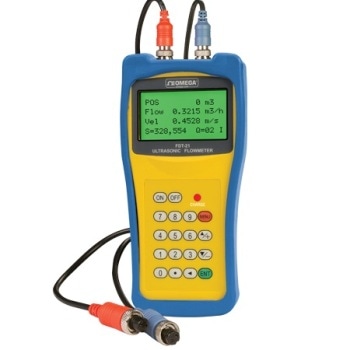
The FDT-21 ultrasonic flowmeter from OMEGA is engineered to measure the fluid velocity of liquid ……...

MechaTrax is the world's first robot amusement game makers. We began with R&D on biped w……...

MROcrib is dedicated for customers of Industrial & Electric Supply Co. The products offered are primarily used for the repair and maintenance of production related equipment including products ……
Eidesvik Offshore ASA owns and operates a worldwide fleet of purpose-built vessels, providing ship services for offshore supply and transport of pipes, oil recovery and stand-by, maintenance and in……

Trojan Technologies enables customers to meet their water quality objectives by providing eco-efficient solutions that reduce and recover costs, energy, resources and space. Collaboratively solving……